Why ChatGPT ads matter now
People no longer only search. They ask. They tell an AI assistant their budget, their worries and their deadline, then ask who to trust. That makes a recommendation inside ChatGPT feel closer to advice from a friend than a search result.
The scale is hard to ignore. OpenAI said in July 2025 that ChatGPT users send more than 2.5 billion prompts a day (TechCrunch, 21 July 2025). In May 2026 OpenAI started a beta for ads inside ChatGPT, and on 22 July 2026 it opened a self-serve portal to all advertisers (AI Weekly, July 2026).
A few facts shape how you should plan:
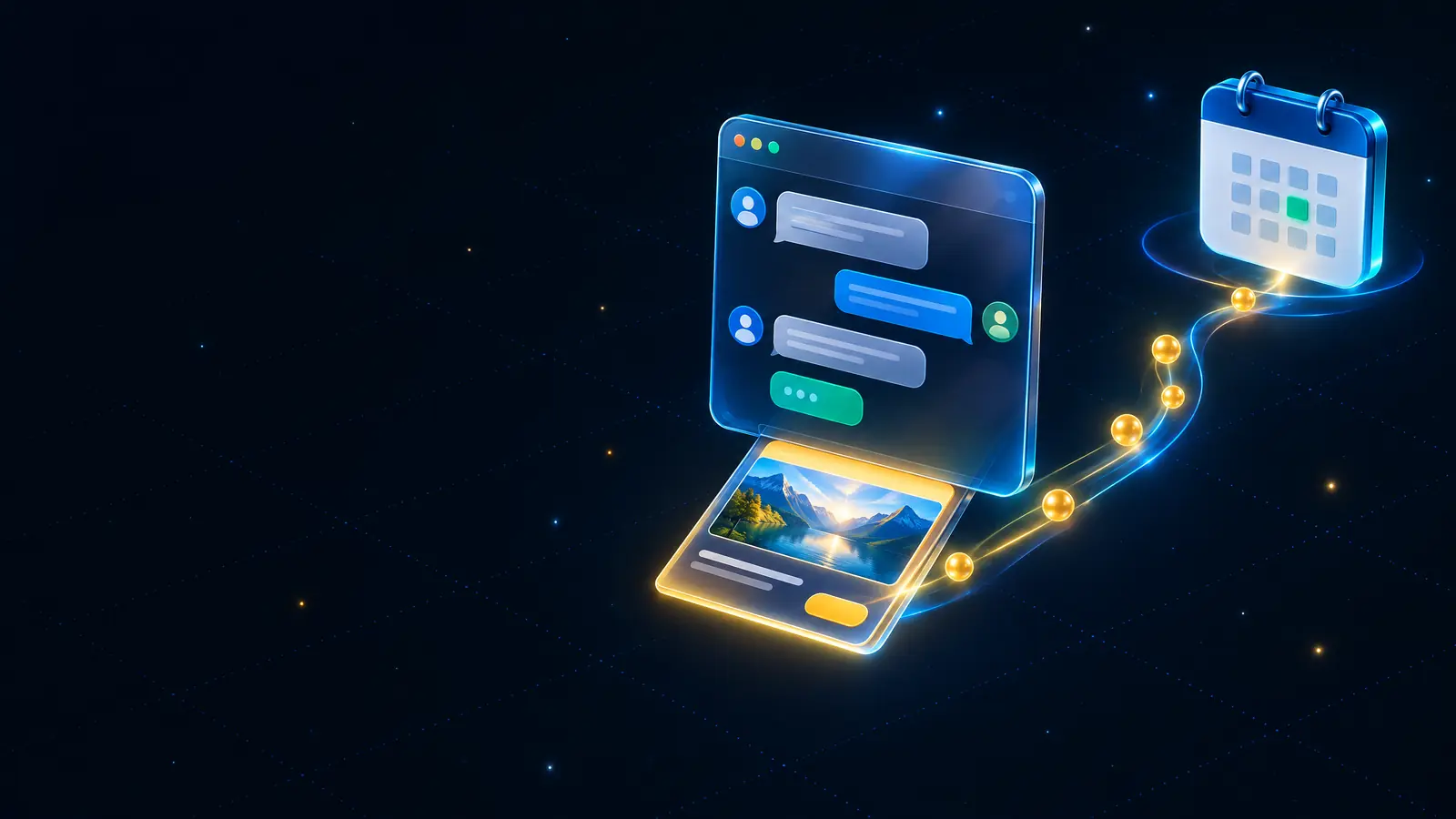
- Ads appear as labelled sponsored boxes under the AI answer, not inside the answer itself.
- Targeting uses the context of the conversation, not a keyword list.
- Ads show to Free and Go users. Plus, Pro and Business users do not see them.
- More than 600 advertisers joined within weeks of the beta, including Best Buy, Lowe's and VistaPrint.
- Public data on cost per click and conversion rates is still thin. Anyone quoting you a guaranteed cost per lead is guessing.
The mistake most businesses will make
Most advertisers will treat ChatGPT like Google Ads. Pick keywords, write a headline, send traffic to the homepage. That will waste money.
A ChatGPT user has usually had a long conversation before your ad appears. They have already explained what they need. If your ad and page ignore that context, they leave. If the answer above your ad names a competitor and not you, your sponsored box looks like an interruption.
This is why we run ads and context engineering together.
- Step 1Engineer the context before you pay for clicks
- Step 2Build ads around the question, not the keyword
- Step 3Make the landing page match the conversation
- Step 4Track booked calls, not clicks
- Step 5Run a two-week test before you scale
Step 1: Engineer the context before you pay for clicks
Context engineering means making sure AI assistants have clear, consistent and trustworthy information about your business, so they can describe you correctly and cite you when it fits.
In practice, that is five layers of work:
- Entity facts. Who you are, where you work, what you do and for whom. The same name, address, services and prices everywhere: your site, Google Business Profile, directories, LinkedIn.
- Proof pages. Real prices or price ranges, process, credentials and case studies on your own site, written in plain language an assistant can quote.
- Structured data. Organization, Service, FAQ and Article schema so machines read your pages without guessing.
- Trusted third-party mentions. Directory profiles, press, partner pages and reviews on sites AI systems already trust.
- A prompt map. The real questions your buyers ask, tested across ChatGPT, Gemini and Grok every month, so you can see whether you are named and what is said about you.
None of this is a trick. It is the same work that makes a good sales page, organised so a machine can read it too. Our AEO and GEO service covers this layer in detail.
Step 2: Build ads around the question, not the keyword
Write down the five to ten questions that mean someone is ready to buy. For a dental clinic: "Who is a good implant dentist in Central London?" For an industrial supplier: "Who supplies hydrocarbon dew point analysers in the UK?" For an accountant: "Which accountant understands Amazon sellers?"
For each question, plan three things:
- The sponsored box. Your name, one specific line that answers the question, and one clear action, for example "Book an implant consultation".
- The landing page. A page that repeats the question in its headline and answers it in the first screen. Price from, what happens next, proof, a short form.
- The follow-up. A reply within minutes, by email, WhatsApp or phone. AI-referred buyers are often further along than search visitors. Slow replies lose them.
Step 3: Make the landing page match the conversation
The page your ad sends people to decides whether the money works. A good AI ads landing page has:
- A headline that matches the question the buyer asked.
- A short answer block at the top: what you do, who it is for, what it costs from.
- One primary action, repeated, and a form that asks only for what you need.
- Proof close to the action: a real case study, real numbers with dates, certifications you actually hold.
- Clear company details: legal name, address, phone. Trust matters more when the buyer came from an AI recommendation.
- Fast loading on a phone. Most ChatGPT use happens on mobile.
Step 4: Track what matters
Clicks and impressions tell you very little. Set up tracking for:
- Form submissions and booked calls, with the ad and question that brought them.
- WhatsApp and phone clicks.
- Qualified leads and closed deals, fed back from your CRM.
Use consent-based tracking (Consent Mode v2 in the UK and EU) so your numbers hold up and you stay compliant.
Step 5: Run a two-week test before you scale
A sensible first test looks like this:
- Days 1 to 3: prompt map and context audit. What does ChatGPT say about you today?
- Days 4 to 7: fix the biggest context gaps, build the landing page, set up tracking.
- Days 8 to 10: write sponsored units for the top questions, launch with a modest budget.
- Days 11 to 14: first read-out. Which questions brought leads, which brought noise, what to change.
Then scale the questions that bring booked calls and cut the rest.
What results to expect
Be careful with anyone who promises a number. ChatGPT ads are new, public benchmarks are thin and every market is different. What you can expect from a well-run test is a clear answer to three questions: are your buyers asking ChatGPT about your service, does the assistant describe you correctly, and do sponsored placements bring leads at a cost that works for your margins.
We have seen what good context work does on the organic side. For Zegaz Instruments, an industrial instrument maker we work with, Google's AI Overview listed ZEGAZ first among its sources for "hydrocarbon dewpoint instruments" when we checked in October 2026. AI answers change by person, place and day, so treat that as a snapshot, not a promise. The full case study shows the work behind it.
How OUNTERNET runs ChatGPT ads
We run context engineering and AI ads as one programme, so the answer and the ad support each other. Management starts from £3,800 a month. Ad spend is paid to the platform, never part of our fee. Prices exclude VAT. Final price after we analyse your business and scope.
See the ChatGPT and AI ads service, run the free AI visibility check, or apply for a call.
Frequently asked questions
Are ChatGPT ads available in the UK?
OpenAI opened its self-serve ads portal on 22 July 2026. Availability by country and category can change, so check the current terms in the portal before you plan a campaign.
Do ChatGPT ads appear inside the answer?
No. They appear as labelled sponsored boxes below the AI answer. The answer itself is not for sale, which is why context engineering matters.
How is targeting done?
By the context of the conversation rather than keywords. That is why your ads and landing pages should be built around the questions buyers actually ask.
How much should I spend on a first test?
Enough to get a few hundred relevant impressions per key question over two weeks. We set the budget after looking at your market and margins.
Can you guarantee leads from ChatGPT ads?
No. Nobody can honestly guarantee results on a channel this new. We can guarantee a clear test, honest reporting and a recommendation based on your data.